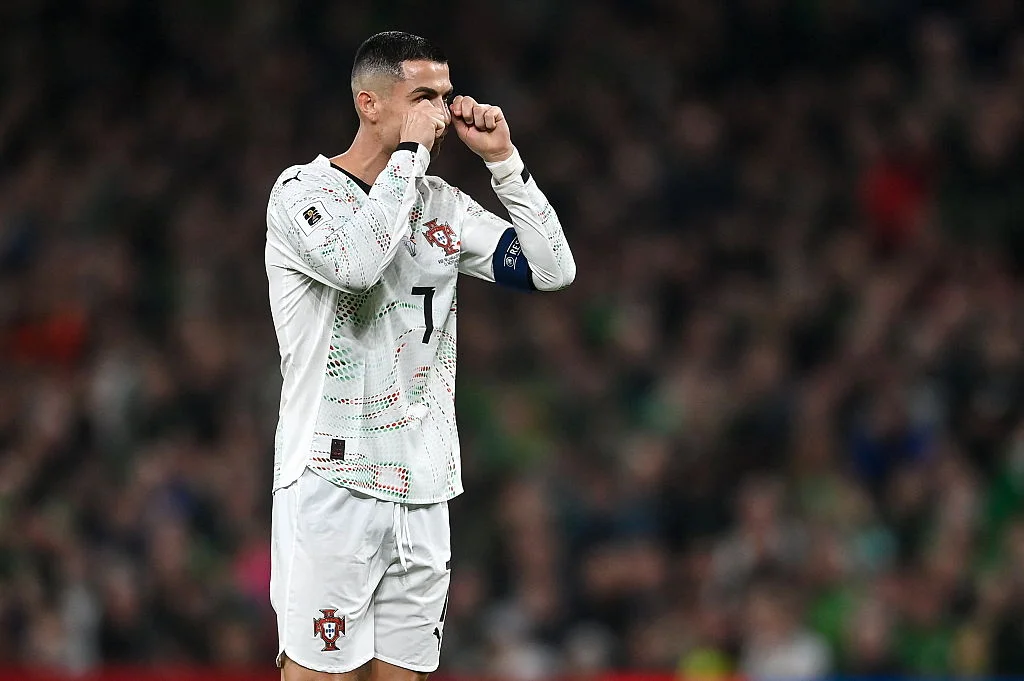

Portugal World Cup 2026 Squad: Final 26-Man Roster, Fixtures, Ronaldo Status and Predicted XI
Quick Answer: Portugal World Cup 2026 Squad
Portugal’s World Cup 2026 squad is built around Cristiano Ronaldo, Bruno Fernandes, Vitinha and a deep attacking group. Roberto Martinez’s team are in Group K with DR Congo, Uzbekistan and Colombia, and the opening match is June 17 against DR Congo at NRG Stadium in Houston.
- Coach: Roberto Martinez
- Captain: Cristiano Ronaldo
- Key player: Cristiano Ronaldo
- Formation: 4-3-3 / 4-2-3-1
- First match: June 17 vs DR Congo, NRG Stadium, Houston, 1:00 PM ET
- Squad size: 26 players (3 GK · 8 DEF · 7 MID · 8 FWD)
| Position | Player | Club | Role |
|---|---|---|---|
| GK | Diogo Costa | Porto | No. 1 |
| GK | Jose Sa | Wolverhampton Wanderers | Backup |
| GK | Rui Silva | Sporting CP | Backup |
| DEF | Ruben Dias | Manchester City | Defensive leader |
| DEF | Joao Cancelo | Barcelona | On loan from Al-Hilal |
| DEF | Nelson Semedo | Fenerbahce | Right-back |
| DEF | Nuno Mendes | Paris Saint-Germain | Elite left-back |
| DEF | Diogo Dalot | Manchester United | Full-back |
| DEF | Goncalo Inacio | Sporting CP | Centre-back |
| DEF | Renato Veiga | Villarreal | Versatile defender |
| DEF | Tomas Araujo | Benfica | Centre-back |
| MID | Bernardo Silva | Manchester City | Controller |
| MID | Bruno Fernandes | Manchester United | Creator |
| MID | Ruben Neves | Al-Hilal | Deep midfielder |
| MID | Vitinha | Paris Saint-Germain | Tempo-setter |
| MID | Joao Neves | Paris Saint-Germain | Pressing midfielder |
| MID | Matheus Nunes | Manchester City | Carrier |
| MID | Samu Costa | Mallorca | Defensive midfielder |
| FWD | Cristiano Ronaldo | Al-Nassr | Captain |
| FWD | Rafael Leao | AC Milan | Left winger |
| FWD | Joao Felix | Al-Nassr | Second striker |
| FWD | Pedro Neto | Chelsea | Winger |
| FWD | Goncalo Ramos | Paris Saint-Germain | Striker |
| FWD | Francisco Conceicao | Juventus | Wide forward |
| FWD | Francisco Trincao | Sporting CP | Wide creator |
| FWD | Goncalo Guedes | Real Sociedad | Forward depth |
Roberto Martinez · Portugal · 4-3-3 / 4-2-3-1
- Ronaldo still gives Portugal elite box presence and leadership
- Vitinha, Bruno Fernandes and Joao Neves create one of the best midfields
- Nuno Mendes and Cancelo give attacking full-back quality
- Deep bench across wide and central attacking roles
- Ronaldo pressing trade-off can affect defensive balance
- Right-back defensive transitions can be targeted
- Palhinha omission changes the midfield defensive profile
- Colombia group finale could expose transition issues
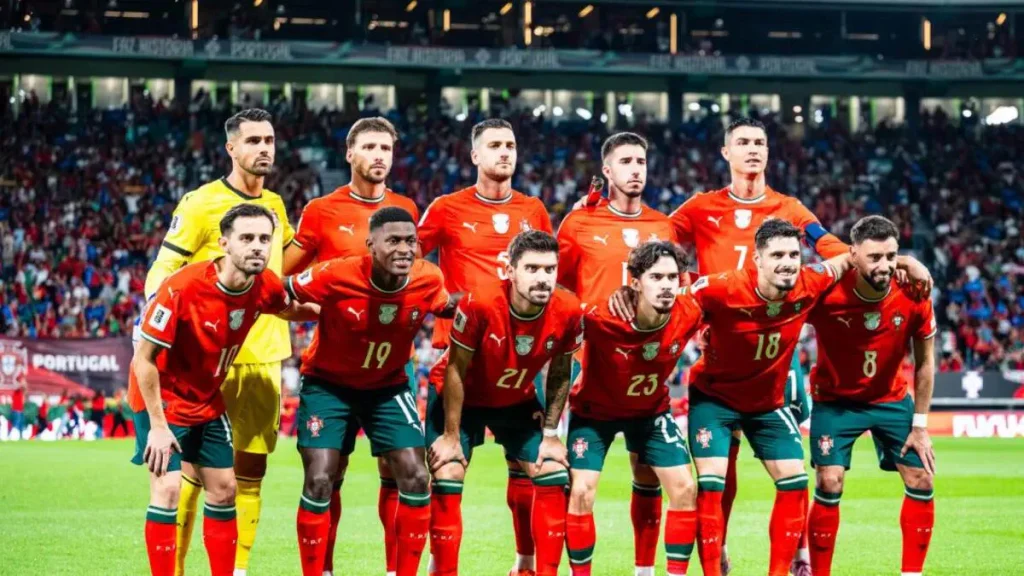
Ronaldo’s Final World Cup — And Portugal’s Strongest Hand Yet
Roberto Martinez has named his 26, and there is no hiding what this squad is built around: one last World Cup for Cristiano Ronaldo, surrounded by arguably the most talented group of players Portugal have ever assembled around him. At 41, the captain leads a side stacked with Champions League and treble winners — Vitinha and Joao Neves fresh off PSG’s historic season, Nuno Mendes flying down the left, Bruno Fernandes still pulling every string from midfield. This is not a team hoping Ronaldo carries them through. It is a team built to win even on the nights he doesn’t have his best stuff, and that distinction matters more than anything else heading into Group K.
The opener against DR Congo on June 17 in Houston will set the tone. Win it comfortably, and Martinez can manage Ronaldo’s minutes, rest a full-back or two against Uzbekistan, and arrive at the Colombia finale with everyone fresh. Stumble, and every team-sheet for the rest of the group turns into a debate about selection and about whether the manager trusts youth over reputation. Portugal have the depth to survive a bad night. Whether they have the nerve to handle one is the question this tournament is going to answer.
Full Portugal World Cup 2026 Squad List
Below is Martinez’s complete 26, broken down by position and the club each player arrives from.
Goalkeepers
- Diogo Costa (Porto) – No. 1
- Jose Sa (Wolverhampton Wanderers) – Backup
- Rui Silva (Sporting CP) – Backup
Defenders
- Ruben Dias (Manchester City) – Defensive leader
- Joao Cancelo (Barcelona) – On loan from Al-Hilal
- Nelson Semedo (Fenerbahce) – Right-back
- Nuno Mendes (Paris Saint-Germain) – Elite left-back
- Diogo Dalot (Manchester United) – Full-back
- Goncalo Inacio (Sporting CP) – Centre-back
- Renato Veiga (Villarreal) – Versatile defender
- Tomas Araujo (Benfica) – Centre-back
Midfielders
- Bernardo Silva (Manchester City) – Controller
- Bruno Fernandes (Manchester United) – Creator
- Ruben Neves (Al-Hilal) – Deep midfielder
- Vitinha (Paris Saint-Germain) – Tempo-setter
- Joao Neves (Paris Saint-Germain) – Pressing midfielder
- Matheus Nunes (Manchester City) – Carrier
- Samu Costa (Mallorca) – Defensive midfielder
Forwards
- Cristiano Ronaldo (Al-Nassr) – Captain
- Rafael Leao (AC Milan) – Left winger
- Joao Felix (Al-Nassr) – Second striker
- Pedro Neto (Chelsea) – Winger
- Goncalo Ramos (Paris Saint-Germain) – Striker
- Francisco Conceicao (Juventus) – Wide forward
- Francisco Trincao (Sporting CP) – Wide creator
- Goncalo Guedes (Real Sociedad) – Forward depth
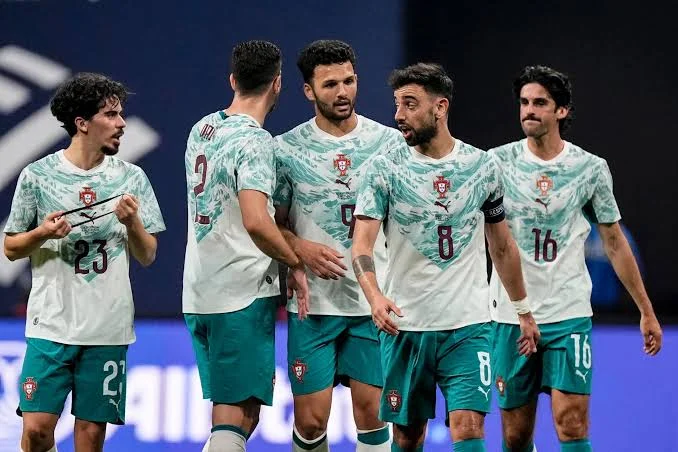
Portugal World Cup 2026 Fixtures
Portugal’s route through Group K runs from Houston to Miami Gardens — three matches in ten days that will go a long way toward deciding whether this golden generation gets the launchpad it has been waiting for.
| Date | Opponent | Venue | Time |
|---|---|---|---|
| Wed, June 17 | DR Congo | NRG Stadium, Houston | 1:00 PM ET |
| Tue, June 23 | Uzbekistan | NRG Stadium, Houston | 1:00 PM ET |
| Sat, June 27 | Colombia | Hard Rock Stadium, Miami Gardens | 7:30 PM ET |
All times are Eastern. With the tournament spread across the United States, Canada and Mexico, travel and climate are part of the story too — for now, at least, Group K keeps Portugal in Texas and Florida.
Group Stage Plan
The group stage should be treated as its own mini-tournament. The first match decides the emotional temperature of the campaign. A win in the opener gives Roberto Martinez room to manage legs, protect players with small injury concerns and rotate one or two positions without turning the second match into a crisis. A draw or defeat changes everything. It forces the strongest XI back onto the pitch earlier than planned and turns every press conference into a debate about selection.
For Portugal, the running order matters. Opening against DR Congo means there is no easing in — Martinez’s side has to be sharp from the first whistle rather than growing into the tournament. Uzbekistan, four days later, is the match where a side with this much quality is expected to take control of the group, and where a slow start against the lowest-ranked team in the pool would set off alarm bells back home. The Colombia finale is where rotation only becomes possible if the first two results have already done the job.
Most fans tracking the squad news aren’t thinking about flight times and climate zones, but those factors shape lineup decisions as much as form does. A player coming back from injury is managed more carefully when the schedule is kind. A deep bench becomes a genuine weapon once a tournament starts asking teams to move between cities and conditions every few days.
The danger game is the Colombia finale. By matchday three, a side with that much pace and directness in transition is the last opponent anyone wants if nerves are involved. The rotation opportunity, if the opener goes to plan, is Uzbekistan — a chance to give Joao Felix, Pedro Neto or Goncalo Ramos meaningful minutes and protect senior legs for the knockout stage. And the worst tactical matchup on paper is exactly that Colombia counter-attack, the kind of game state that can expose Portugal’s full-backs the moment they are pushed high up the pitch.
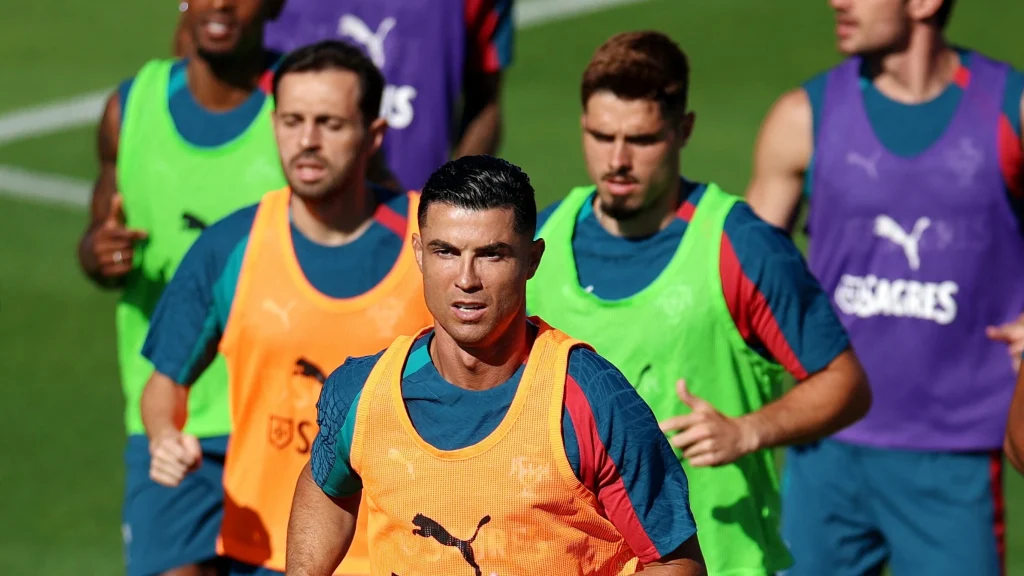
Is Cristiano Ronaldo In The Portugal World Cup 2026 Squad?
Yes. Ronaldo is in the squad, wearing the armband, and on course to start the opener after working his way back from a hamstring strain picked up earlier in the year. For a player at the centre of the biggest story in the sport, that single word — yes — carries a lot of weight.
Martinez has managed his captain’s training load carefully throughout the buildup, easing him through the warm-up games rather than risking a setback days before the tournament starts. On the pitch, Ronaldo is not just a name at the top of the team sheet. He changes how every opponent in Group K sets up, dragging extra defensive attention into the box and opening space for Bernardo Silva, Bruno Fernandes and Rafael Leao to exploit around him.
Whatever happens from here, Ronaldo arrives in North America as the most capped and highest-scoring international footballer the men’s game has ever produced, with a trophy haul — a European Championship and two Nations League titles — that almost none of his rivals for greatest of all time can match on the international stage. Captaining Portugal at a record sixth World Cup is its own piece of history, and it places him at the head of a squad that, for the first time in his career, doesn’t need him to single-handedly drag it through a tournament. He just needs to find the moments — and on the biggest stage of all, Ronaldo has rarely gone missing when it matters.
Who Was Left Out Of The Portugal World Cup 2026 Squad?
Every squad announcement creates headlines for who’s in, but the names left at home tell their own story too. The biggest absentees from this Portugal roster are Joao Palhinha, Pedro Goncalves, Ricardo Horta and Paulinho. For each of them, the question is the same: is this tactical, injury-related, a form issue, or simply a numbers game in a stacked position?
What the omissions say about Martinez’s thinking is arguably more revealing than the names that made the cut. Did he choose balance over reputation? Protect a player carrying a knock? Lean younger in certain areas of the pitch? Or simply decide the system already has enough players doing a similar job?
A player left out is not always a player rejected. Sometimes it means the manager needed another full-back, another pressing forward, a reserve goalkeeper or a more flexible midfielder instead. Read alongside the 26 names that did make it, the gaps tell you almost as much about how this Portugal team is built to play.
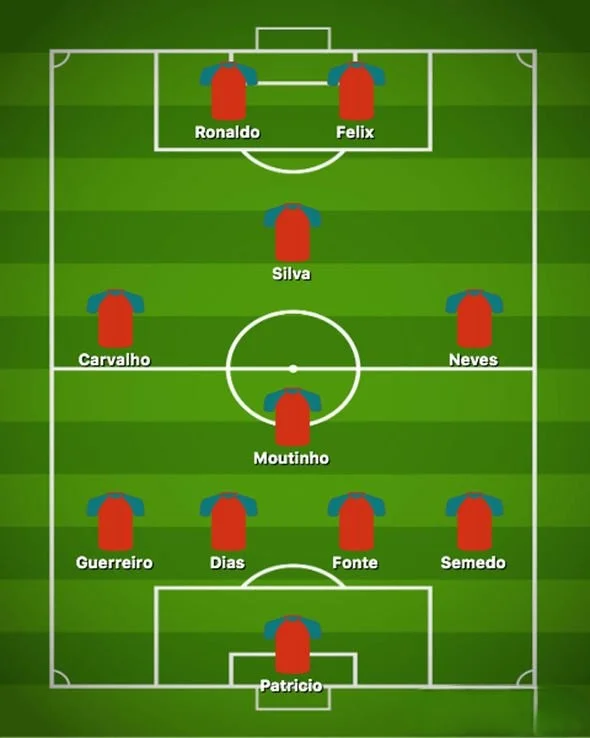
Predicted Portugal Starting XI
Projected XI: Diogo Costa; Cancelo, Ruben Dias, Inacio, Nuno Mendes; Vitinha, Joao Neves, Bruno Fernandes; Bernardo Silva, Ronaldo, Rafael Leao.
This is a projection, not a confirmation — Martinez hasn’t named his side, and tournament lineups shift with late fitness tests, opponent setup, travel and recovery time between matches. Treat it as the most likely XI rather than a guarantee, and don’t be surprised if a name or two changes by the time Group K is finished.
The important tactical question is how Roberto Martinez balances star power with control. A World Cup starting XI is rarely just the best eleven names. It is the best structure for the specific match. Against a weaker group opponent, Portugal can probably carry one extra attacker or give a creative player more freedom. Against a knockout opponent with elite transitions, the same team may need another runner, another defensive full-back, or a midfielder who protects the central channel.
Expect changes if circumstances change, too. If Ronaldo is managed or rested, the system shifts noticeably. Against a side that sits deep, Martinez may lean further into dribbling and crossing from wide areas. Against one that presses high, expect more emphasis on quick, secure passing through midfield and pace in behind the last line.
Tactical Blueprint
Portugal are most likely to line up in a 4-3-3 or 4-2-3-1 built around Ronaldo, Bruno Fernandes, Vitinha and the wide players, though the system is more fluid than the formation number suggests. In possession, the back line spreads, one midfielder drops to offer a simple passing option, and the wide players either hold width or tuck into the half-spaces depending on the opponent. Out of possession, the shape compresses, with the front three screening central passing lanes and the midfield shielding the centre-backs.
The tactical identity is shaped by the strengths of the squad: midfield control, Ronaldo finishing, left-side speed, defensive experience, deep attacking bench. Those strengths suggest a team that can win in more than one way. That is the difference between a tournament contender and a highlight-reel side. A contender can dominate a weaker opponent, survive a bad 20 minutes, protect a lead, and find a goal from a set piece or a substitution when the main plan slows down.
The weaknesses are just as real, and they’re worth naming plainly. Ronaldo’s reduced pressing leaves a gap the front line has to cover for him. The right side of the defense can be exposed in transition. Leaving out a recognized defensive midfielder in Palhinha changes how the middle of the park copes once possession is lost. And the Colombia game in the group finale looms as exactly the kind of test that could expose all of it at once. Every elite team has a route opponents will try to exploit — for some it’s the space behind an attacking full-back, for others it’s an ageing forward who can’t press for 90 minutes. Pretending those issues don’t exist doesn’t make them go away.
The knockout rounds will test the manager more than the group stage. Group matches can be solved by quality, but knockout matches are solved by timing: when to press, when to slow the match, when to substitute, when to protect a player on a yellow card, when to accept a lower-possession game. Roberto Martinez will be judged on those decisions as much as on the initial squad list.
Where This Portugal Side Can Find Its Edge
The market usually sees national teams through reputation, recent results and star names. That is useful, but it is incomplete. Tournament performance is often decided by whether a coach can build the right match plan for three different game states: when the team is chasing, when the match is level, and when the team is protecting a lead. Portugal have enough quality to handle all three, but the details are what separate a semi-final run from a trophy run.
When chasing a game, Portugal need width, speed and a second wave of runners. A team that only crosses from deep becomes predictable. A team that only plays through the middle becomes easy to crowd. The best chasing plan uses both: wide overloads to stretch the defensive block and midfield arrivals to attack second balls. This is where the bench earns its place in the conversation — not as a footnote for completists, but because substitutes are so often the players who actually decide knockout football.
When the match is level, patience matters. International football punishes the team that panics first. The best sides keep enough players behind the ball to prevent counterattacks while still committing enough numbers to create pressure. That balance is especially important for Portugal because opponents will respect their quality and try to turn matches into isolated moments. A bad turnover, a set piece, a mistimed full-back run, or a needless foul can undo 70 minutes of control.
When protecting a lead, the manager must resist two bad instincts: retreating too early and attacking as if the score is still 0-0. The correct approach is controlled pressure. Keep the ball when possible, press selectively, avoid cheap free kicks, and use substitutions to refresh the legs in the most exposed channels. If Portugal handle that phase well, they have the squad to go deep. If they manage it badly, the quality of the roster will not save them from a knockout opponent that only needs one late chance.
Key Player Deep Dives
Cristiano Ronaldo
Forty-one years old and still the first name on the team sheet — that alone tells you where Ronaldo’s head is at going into this tournament. This is the World Cup he has chased for two decades: the one trophy missing from a career that has collected almost everything else. Martinez has built the side so Ronaldo doesn’t have to chase back and cover every blade of grass. His job is to be in the right place in the box, finish the chances Bernardo Silva, Bruno Fernandes and the wide players create, and drag at least one extra defender out of position every time Portugal attack.
The trade-off is obvious, and Martinez knows it. When Ronaldo doesn’t press, Portugal’s front line loses a body in the defensive shape, and good sides will look to play through that gap. Watch how Joao Neves and Vitinha cover that ground in midfield — get it right, and Ronaldo is freed up to do the only job that still matters to him: scoring goals at a World Cup.
Bruno Fernandes
If Ronaldo is the name that sells the tickets, Bruno Fernandes is the player who makes this team tick. He covers more ground than anyone in the side, links midfield to the front three, and takes every set piece that matters. At a World Cup, where fine margins decide knockout games, a player who can manufacture a goal from a dead ball is worth more than his underlying numbers will ever show.
The risk with Fernandes has always been his temperament. He plays on the edge — it’s part of what makes him so effective, and it’s also what’s gotten him into trouble with referees throughout his career. In a tournament where a second yellow card can end a player’s involvement for an entire match, Martinez needs the productive version of Bruno without the version that picks unnecessary fights with officials.
Vitinha
Vitinha is the reason this midfield can play with so much freedom further forward. After the season he just had at PSG — a treble-winning campaign built on exactly the kind of relentless, press-resistant midfield play he specializes in — he arrives as one of the most in-form players at the entire tournament. He sets the tempo, recycles possession under pressure, and rarely gives the ball away in dangerous areas.
What makes him so valuable to Martinez is what he allows everyone else to do. With Vitinha controlling the rhythm in front of the back four, Bruno Fernandes can push higher and more central, and the full-backs can commit forward knowing there’s cover behind them. When Portugal’s midfield dominates a match, it’s usually because Vitinha dictated it from the first minute.
Nuno Mendes
There may not be a more dangerous attacking left-back at this World Cup. Nuno Mendes combines genuine top-end speed with the recovery pace to bomb forward without leaving Portugal exposed behind him — at least when his fitness cooperates. When he’s flying down the left in support of Rafael Leao, defenses face an impossible choice: double up on Leao and leave the overlap open, or track Mendes and give Leao a one-on-one.
The question mark, as it has been for much of his career, is fitness. Mendes has dealt with his share of muscle injuries, and a World Cup played across a brutal travel schedule and shifting climates is exactly the kind of tournament that tests a player with his history. Stay fit for seven matches and he’s one of Portugal’s most important players. Break down, and Diogo Dalot or Renato Veiga will have to replicate an attacking output that doesn’t come naturally to either of them.
Rafael Leao
Few players in world football can change a game in a single touch the way Rafael Leao can. Give him a yard of space and a defender square-on, and he’s as frightening a one-on-one threat as exists at this tournament — capable of either burning past a full-back on the outside or cutting inside onto his favoured right foot to shoot or thread a pass.
The frustration with Leao has always been consistency — the games where he disappears for long stretches before producing one moment that changes everything. For Portugal, that unpredictability can actually be an asset against deep, organised defenses that are otherwise hard to break down: sometimes all it takes is one Leao moment to turn a stalemate into three points. The question is whether Martinez gets that version of him on the nights Portugal need it most.
Strengths That Can Take Portugal Deep
The first strength is squad clarity. The best international teams know what they are before the tournament begins. They do not use the group stage as a laboratory. They use it to confirm rhythm, manage minutes and sharpen the details. Portugal have enough established roles to do that. The goalkeeper hierarchy is clear, the senior players are identifiable, and the tactical structure has a logical base.
The second strength is the quality of the top-end players. World Cups are decided by systems, but they are also decided by moments. A winger beating his defender once. A goalkeeper saving a penalty. A centre-back winning a header in the 88th minute. A captain calming the team when the crowd turns. Portugal have enough players capable of producing those moments that no opponent can simply game-plan its way around all of them.
The third strength is adaptability. The expanded 48-team format changes the rhythm of the tournament. There are more paths, more possible third-place scenarios, and more need to rotate intelligently. A deep squad has real value here, because the champion will need more than one XI before this is over — and the names coming off Portugal’s bench are not makeweights. Several would start for most other nations at this World Cup.
Weaknesses Opponents Will Target
The main risk for Portugal is not that the squad lacks talent. It is that World Cups punish imbalance. One slow recovery run, one bad rest-defense shape, one player rushed back from injury, one emotional selection made for reputation rather than fit, and a tournament can turn. That is why the weakness section belongs above the conclusion rather than hidden as a throwaway paragraph.
Opponents will look for transition chances. They will try to drag full-backs into uncomfortable zones. They will make the star player defend. They will test the goalkeeper with crosses and set pieces. They will make the midfield run backward. This is tournament football: the best teams do not only show their strengths; they hide their weaknesses long enough for the strengths to decide the match.
For Portugal, the cleanest solution is balance. If the XI includes all the most glamorous attackers, the midfield and full-backs have to compensate. If the XI becomes too cautious, the side may dominate territory without creating enough high-quality chances. The coach’s job is to keep that balance alive for seven matches, not just one.
Portugal World Cup 2026 Chances
Portugal are not usually priced with Spain and France, but they are a serious semi-final candidate if Martinez balances Ronaldo with the younger runners. For a football-first article, the better question is whether the squad profile matches the type of team that wins World Cups. Champions usually have four things: a reliable goalkeeper, at least one elite centre-back, a midfield that can survive pressure, and a forward who can win a tight match. Portugal have enough of those ingredients to be taken seriously.
The group draw matters. Group K gives Portugal a route that should be manageable if the team plays to its level, but a World Cup does not reward assumption. The first match is especially important because it sets the tone for rotation and pressure. Win early, and the manager can manage minutes. Drop points early, and every selection becomes more tense.
Call it what you want — semi-finalist, dark horse, value pick for the title. The label matters less than what’s underneath it: a squad with the quality to beat anyone on its day, captained by a man playing in his final World Cup with everything still left to prove.