

Brazil World Cup 2026 Squad: The Full Roster, Ancelotti’s Formation and the Neymar Debate
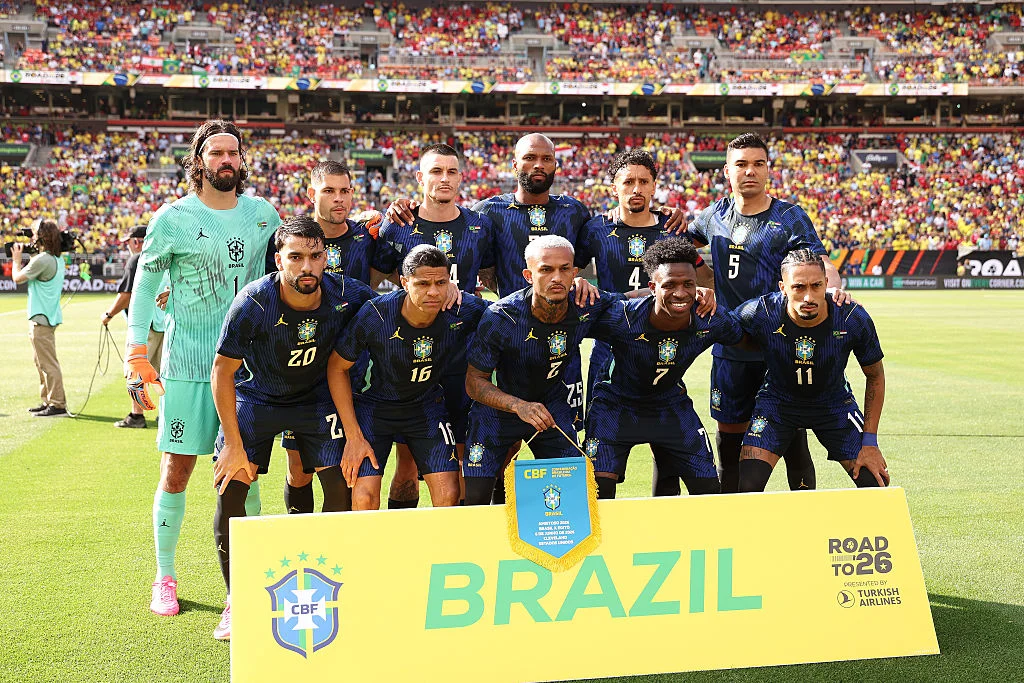
Quick Answer: Brazil World Cup 2026 Squad
Carlo Ancelotti’s Brazil World Cup 2026 squad is a 26-man group built around Vinicius Junior at the peak of his powers, with Raphinha, Bruno Guimaraes, and Gabriel Magalhaes providing the depth to compete with any team in the tournament. Neymar is included at 34, returning from an ACL injury — his exact role is the central debate of Brazil’s 2026 campaign.
- Coach: Carlo Ancelotti (Italian, appointed 2024)
- Formation: 4-3-3 / 4-2-3-1 (Ancelotti system)
- Key player: Vinicius Junior (Real Madrid) — top-3 in the world
- Engine: Bruno Guimaraes (Newcastle United) — best midfielder in the squad
- Wildcard: Neymar — 34, returning from ACL, uncertain starting role
- Squad size: 26 players (3 GK · 9 DEF · 5 MID · 9 FWD)
- World Cup appearances: 22 (most of any nation)
- Last title: 2002 (Ronaldo, Korea/Japan)
- Confederation: CONMEBOL
| Position | Player | Club |
|---|---|---|
| GK | Alisson | Liverpool |
| GK | Ederson | Atalanta |
| GK | Weverton | Palmeiras |
| DEF | Danilo | Flamengo |
| DEF | Bremer | Juventus |
| DEF | Marquinhos | PSG |
| DEF | Gabriel Magalhaes | Arsenal |
| DEF | Alex Sandro | — |
| DEF | Douglas Santos | — |
| DEF | Wesley | Aston Villa |
| DEF | Leo Pereira | Flamengo |
| DEF | Roger Ibanez | Al-Qadsiah |
| MID | Casemiro | Manchester United |
| MID | Bruno Guimaraes | Newcastle United |
| MID | Lucas Paqueta | West Ham |
| MID | Fabinho | Al-Qadsiah |
| MID | Danilo Santos | Nottingham Forest |
| FWD | Neymar | — |
| FWD | Vinicius Junior | Real Madrid |
| FWD | Raphinha | Barcelona |
| FWD | Endrick | Real Madrid |
| FWD | Gabriel Martinelli | Arsenal |
| FWD | Matheus Cunha | Wolverhampton |
| FWD | Luiz Henrique | Botafogo |
| FWD | Igor Thiago | Brentford |
| FWD | Rayan | Flamengo |
Endrick
Vinicius Jr
Casemiro
B. Guimaraes
G. Magalhaes
Marquinhos
D. Santos
Carlo Ancelotti · Brazil · 4-3-3 / 4-2-3-1
- Elite goalkeeping with Alisson and Ederson both world-class
- Vinicius Junior — top-3 player in the world in his peak years
- Bruno Guimaraes provides the best midfield engine at this tournament
- Attack depth: Raphinha, Endrick, Martinelli, Cunha — 90-minute threat
- Left back position — Alex Sandro at 35 is a clear structural vulnerability
- Casemiro’s form at Man United raises legitimate questions about his fitness for this level
- No traditional centre-forward — reliant on wide creativity against deep blocks
Brazil World Cup 2026 Squad: The Full Roster, Ancelotti’s 4-3-3 Blueprint, and the Neymar Decision That Could Define a Tournament
Updated: June 2026
Twenty-four years. That is how long it has been since Brazil last lifted a World Cup. 2002. Ronaldo. That electric yellow shirt against a German side sleepwalking through the final. Since then? Quarter-final exits, a 7-1 humiliation on home soil, penalty shootout misery, and a nation that convinces itself each new generation is the one that ends the drought. This time they might actually be right. Or they might be building a beautiful squad around a man who has not played a full competitive season since 2022. Let us get into it.
The Brazil World Cup 2026 squad Carlo Ancelotti has assembled is the most genuinely talented group the Selecao has put together since the Ronaldinho era. That is not a casual claim. It is supported by what you see on the pitch week to week in the biggest clubs in Europe. Vinicius Junior is one of the three best players in the world. Raphinha just completed one of the most complete attacking seasons European football has seen in years. Bruno Guimaraes runs Newcastle United’s midfield like a man born to control football matches. Gabriel Magalhaes has been the most commanding centre-back in the Premier League. This squad is real.
And then there is Neymar.
You cannot talk about this Brazil squad without talking about the man who is either its emotional anchor or its biggest distraction, depending on which side of the argument you land on. But first, let us build from the back.
THE FULL BRAZIL WORLD CUP 2026 SQUAD
GOALKEEPERS
Alisson (Liverpool), Ederson (Manchester City), Weverton (Palmeiras)
DEFENDERS
Danilo (Juventus), Bremer (Juventus), Marquinhos (PSG), Gabriel Magalhaes (Arsenal), Alex Sandro, Douglas Santos, Wesley (Aston Villa), Leo Pereira (Flamengo), Roger Ibanez
MIDFIELDERS
Casemiro (Manchester United), Bruno Guimaraes (Newcastle United), Lucas Paqueta (West Ham), Fabinho (Al-Ittihad), Danilo Santos
FORWARDS
Neymar, Vinicius Junior (Real Madrid), Raphinha (Barcelona), Endrick (Real Madrid), Gabriel Martinelli (Arsenal), Matheus Cunha (Wolverhampton), Luiz Henrique, Igor Thiago, Rayan
THE GOALKEEPING PROBLEM BRAZIL WANTS TO HAVE
Here is a situation most national teams would beg for: two of the finest goalkeepers of the last decade, both potentially fit, both still performing at or near the top of European football. Alisson and Ederson is not a debate about who is better. It is a debate about who Ancelotti trusts to be Brazil’s number one through six matches that could decide the whole tournament.
Alisson has the edge in pure shot-stopping when he is at his best. His Liverpool save record, his Champions League final moments, his reflexes at full stretch. When the Brazilian is locked in, he is the best in the world at the thing that matters most. The concern has always been availability. Alisson’s body has let him down at critical moments. At 33 for this World Cup, you are betting on a player who needs to stay healthy for the whole run.
Ederson brings something different. His distribution with both feet is so good that he genuinely acts as an extra outfield player in build-up. For a Brazil side that wants to press high and recycle possession through the back, that is not a luxury. It is a structural tool. Ancelotti appreciates players who make his system work from every position, and Ederson does exactly that. His shot-stopping is a fraction behind Alisson at their absolute peaks, but the gap is smaller than people claim.
The smart call is Alisson in the tournament and Ederson as insurance. But if Alisson pulls something in warm-up games, do not panic. Brazil still have a world-class goalkeeper on the bench.
Weverton is there because he has won everything domestically in Brazil and provides genuine depth. He is not starting unless something goes badly wrong.
THE DEFENCE: FINALLY BUILDING SOMETHING SOLID
For years, Brazil’s attacking brilliance distracted from a defensive structure that was porous in big moments. The 7-1 against Germany in 2014 was the extreme example, but the fragility was there before that and lingered after it. This squad might have finally fixed it.
Gabriel Magalhaes is the player who changes the conversation. At 28 for this World Cup, the Arsenal centre-back is entering his peak years with a level of consistency his predecessor Thiago Silva could only match in elite Champions League environments. Magalhaes reads the game early, which means he rarely needs the last-ditch tackle that can go wrong in tournament football. Under Mikel Arteta at Arsenal he has become a leader. The kind of centre-back who organises the defensive structure rather than just reacting to it. His ball-playing ability is significantly underrated. He can find Vinicius with a switch of play that bypasses two lines of press. For Ancelotti’s system, that is not a bonus. It is a requirement.
Marquinhos is the constant. At 32 he is still Brazil’s most decorated, most experienced defensive option. His PSG career has been one of the most quietly remarkable runs of any Brazilian in European football. Over 400 appearances, multiple Ligue 1 titles, Champions League finals. For the national team, he has been the defensive anchor since 2014. His partnership with Gabriel Magalhaes gives Brazil a backline that is both technically comfortable and physically competitive.
Bremer, Gleison Bremer in full, is the one that worries people. The Juventus centre-back was one of the most dominant defenders in Serie A before his knee injury. When fit, his physical aggression combined with his reading of the game makes him the kind of defender strikers genuinely dislike facing. The concern is whether he is back to full capacity by tournament time. Knee ligament injuries at 27 can be fully recovered from, but trusting the knee in a 50-50 challenge in the last 16 of a World Cup takes time. If Bremer is genuinely 100%, Brazil’s defensive depth is elite. If not, Ancelotti will need Magalhaes and Marquinhos to carry more of the load.
Danilo at right back is the experienced head. He is 35 and you know exactly what you are getting. Intelligent positioning, calm under pressure, comfortable in possession. The question is whether the legs are still there for 90 minutes against pacy attackers in knockout rounds.
Wesley is the interesting one. The Aston Villa right back brings directness and physicality that Danilo no longer has. He was injured for the March friendlies, which is why he has not had as much exposure in this setup as you might expect. But Ancelotti clearly believes in him. The inclusion in this squad signals a genuine option, not squad cover.
Alex Sandro at 35 is eyebrow-raising. He was a world-class left back at Juventus in his prime, but that prime ended several seasons ago. His inclusion feels like a nod to experience and character rather than form. Douglas Santos is a more natural fit for what Ancelotti wants to do on that left side.
Leo Pereira and Ibanez complete the defensive picture. Leo Pereira has been consistent for Flamengo and provides that South American physicality that can be useful in tactical situations. Ibanez is the experienced option further down the depth chart.
MIDFIELD: WHY BRUNO GUIMARAES CHANGES EVERYTHING
If there is one player in this Brazil squad who deserves more attention than he currently gets in the global conversation, it is Bruno Guimaraes. The Newcastle United midfielder has spent the last two seasons quietly becoming one of the most complete midfielders in the Premier League. Possibly in Europe. The broader football public is still catching up.
What makes Guimaraes exceptional is not raw athleticism or pace. It is positioning. He has that rare ability to be in the right place before he needs to be. To intercept passes that look like they are going somewhere else. To arrive on the ball in transition before the press has formed. To be available as an option before his teammates are even aware they need one. At Newcastle he runs everything through the middle of the pitch. Games where he is absent look completely different. More frantic, less assured, more exposed. That is the mark of a genuine controlling midfielder.
For Brazil, the question is how Guimaraes fits alongside Casemiro. These are not the same type of player, and that distinction matters enormously in tournament football.
Casemiro was one of the best defensive midfielders in the world for nearly a decade at Real Madrid. Five Champions League titles. Thousands of minutes protecting a Madrid midfield from their own attacking impulses. At 34, at Manchester United, the honest assessment is that his best years are behind him. His stats at United have been some of the worst of his career. Slower recovery in transitions, occasionally caught out of position in ways the prime Casemiro would never allow. But here is the thing about experienced holding midfielders in tournament football: sometimes the mentality and tactical intelligence that comes with age counts for more than athleticism. Casemiro at 80% is still a player who knows exactly what is needed in a tight match. And in a tournament, tight matches happen every single game from the quarter-finals onwards.
Lucas Paqueta is the most technically gifted of the three central midfielders. His ability to break lines, receive in tight spaces, and find the killer pass is elite. He is one of the most creative players at this tournament in terms of raw vision. The FA betting charges are a situation this article will not pretend do not exist. Whether those charges resolve before the tournament or during it is something only the legal process can answer. Ancelotti has selected him. For now, Paqueta is in the squad and in contention.
Fabinho offers cover at the base of midfield. His time at Al-Ittihad in Saudi Arabia has been comfortable but not elite-level demanding. Whether the sharpness of a Champions League regular is still there is a legitimate question.
THE ATTACK: WHEN YOU HAVE THESE FORWARDS, LIFE IS GOOD
This is the part of the squad where the conversation shifts from analysis to honest excitement. The Brazil attack for World Cup 2026 is, on paper, the most frightening collection of attacking talent at this tournament.
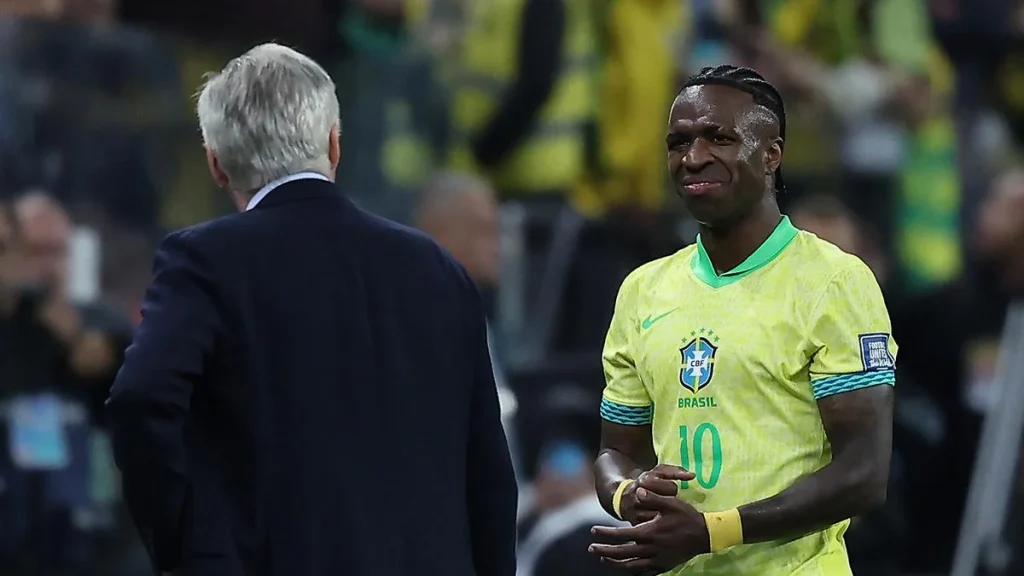
Vinicius Junior is the headline. At 26, he is entering the phase of his career where everything clicks. The technical brilliance of youth combined with the tactical maturity of experience. Real Madrid have built their attacking play around him in ways that have no precedent in the club’s recent history. He is not just a left winger who runs at defenders anymore. He presses, he drops to receive, he understands space in ways that younger Vinicius did not. His finishing, once the weakness that critics pointed to, has developed to the point where he is one of the most dangerous players in Europe from inside the box.
The criticism that follows him, largely around how he responds to provocation and whether his emotional side can be managed in knockout tournament situations, is a conversation worth having. But anyone who watches football knows that the aggression and edge critics want to flatten is also the emotional fuel that makes him so dangerous. You cannot separate those qualities and expect the same player to appear.
Raphinha is arguably in the best form of any player in this squad right now. His 2024-25 season at Barcelona was genuinely extraordinary. A player who reinvented himself and became one of the most complete attackers in world football. Goals, assists, press intensity, the ability to play on either flank. He is one of the two or three most valuable attacking players going into this tournament. Critically, Raphinha is now 29, experienced enough not to be overwhelmed by the occasion.
Endrick is 19 years old and has already played for Real Madrid. That sentence tells you everything about this player. He is fast, direct, clinical when he gets chances, and carries a confidence in front of goal that you cannot teach. Is he ready to carry the weight of an entire World Cup campaign? No, he should not have to. But as an option off the bench or in a supporting role, he gives Brazil something no other team has: a teenager who makes elite defenders genuinely nervous.
Gabriel Martinelli brings Arsenal’s pressing intensity to the national team setup. His work rate is arguably the best of any forward in this squad. He chases, he tracks back, he creates defensive pressure from the front that enables the midfield to sit higher. In a team with Vinicius and Raphinha, Martinelli’s energy might be more valuable than his statistics alone suggest.
Matheus Cunha is the wild card. The Wolves forward has an unpredictability to his movement that defenders genuinely struggle to account for. He can drift into spaces, hold the ball up, and create with a single touch. He is not a classic centre-forward, but in a system that does not need a fixed nine, he is arguably more dangerous than one would be.
Luiz Henrique, Igor Thiago, and Rayan complete the attacking depth. Rayan is the young Brazilian prodigy whose profile has grown significantly, and at this tournament he will learn from being around Vinicius and Raphinha every day in training. Igor Thiago has the goal record domestically that earns him a place. Luiz Henrique provides versatility across the front line.
THE NEYMAR QUESTION: SENTIMENT VS. REALITY
Let us be honest with each other.
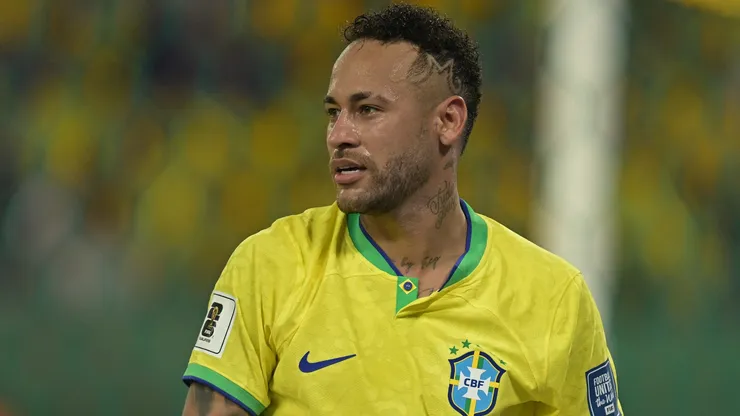
The Neymar World Cup 2026 debate is not really a football debate. It has not been one for a couple of years. It is a cultural debate about what he means to Brazil as a symbol, as a story, as the player who was supposed to be the one who finally ended the 24-year wait. The cultural weight of that story is making clear-eyed assessment almost impossible for a significant portion of the Brazilian fanbase.
Here is what we know. Neymar is 34 years old. He tore his anterior cruciate ligament in October 2023, which is the worst injury a player of his type can have. Someone whose entire game is built on explosive direction changes, instant acceleration, and balance. He played in the Saudi Pro League at Al-Hilal, which is not a bad league by any means, but is not the Champions League, not the Premier League, not the testing environment that keeps elite players razor-sharp for international tournament football. And he has missed enormous amounts of football in the years since his prime. His injury record at PSG was a scandal in its own right.
And yet.
Watch a clip of Neymar when he is fit and motivated. The dribbling, those rapid feints, the deceptive body shifts, the ability to make three moves happen in the space most players use for one, has not gone anywhere. The left foot is still a weapon. The free kick record is extraordinary, and set pieces at a World Cup can win entire knockout matches. He draws fouls in positions that break defensive structures. Against a deep-sitting side that wants to stay compact and defend, Neymar creates problems that players who move in straight lines simply do not create.
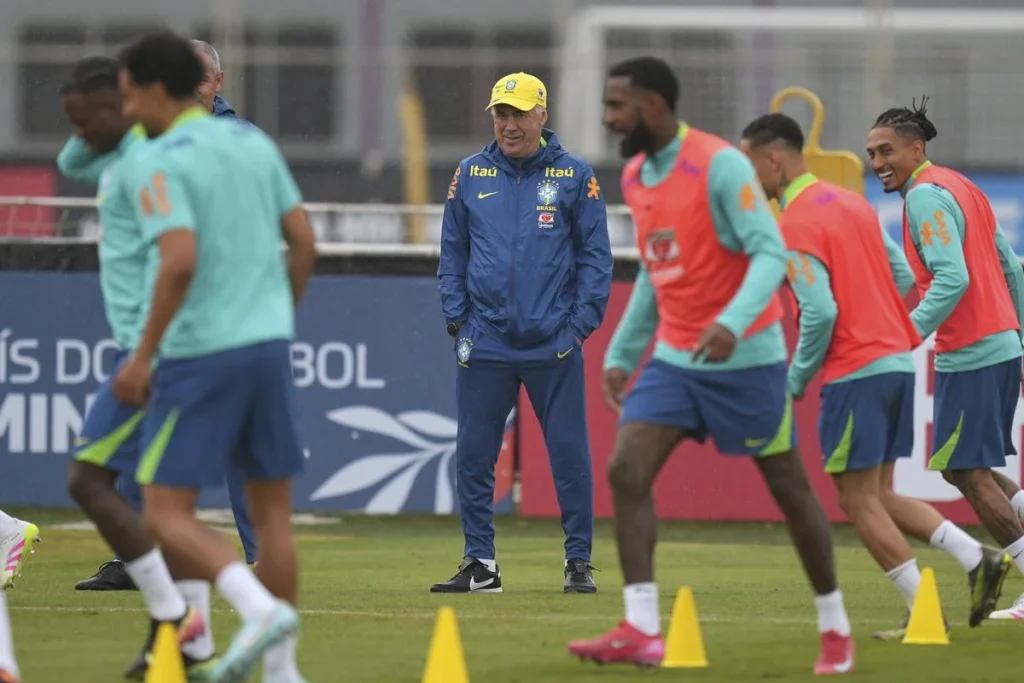
Carlo Ancelotti has selected him. That decision carries weight because Ancelotti does not do sentiment. He has won four Champions Leagues and been around elite football long enough to know when a player is genuinely useful and when a player is a distraction. The fact that Neymar is in this Brazil World Cup 2026 squad means Ancelotti believes, at minimum, that he adds something real.
The real question is not whether Neymar should be in the squad. He is in the squad. The question is whether he should start, and the honest answer is almost certainly no in the opening matches. As an impact player in the second half, someone who can unlock a defence that has prepared for 90 minutes without having to account for him, he is potentially devastating. As a starting forward who needs to press, track back, and sustain 90 minutes of high-intensity tournament football? The injury history makes that a significant gamble.
If Ancelotti is smart, and Carlo Ancelotti is always smart, he uses Neymar the way Liverpool used Firmino in his final seasons. Not the centre of everything, but the quality that changes the game when it needs changing. That is how you get value from a legendary player at 34 without making his limitations the story of the tournament.
The Brazilian public will not accept that framing. They want Neymar in the starting eleven from minute one. They want the story to have a happy ending. That emotional pressure on Ancelotti is real, and navigating it without undermining his own authority or mismanaging Neymar’s fitness will be one of the most interesting subplots of this entire tournament.
CARLO ANCELOTTI’S TACTICAL BLUEPRINT
Carlo Ancelotti has always built his system around his best players rather than imposing a rigid tactical framework. At Real Madrid, that meant using Vinicius differently in different phases, pressing hunter in the first half and direct creator in the second. It meant trusting Modric, Kroos, and Valverde to find their own solutions within a general structure rather than scripting every action. For Brazil, that pragmatic intelligence is genuinely valuable.
The formation Ancelotti will most likely use is a 4-3-3, shifting fluidly into a 4-2-3-1 in defensive phases.
PROJECTED STARTING XI (4-3-3):
Alisson
Wesley, Gabriel Magalhaes, Marquinhos, Douglas Santos
Bruno Guimaraes, Casemiro, Lucas Paqueta
Raphinha, Endrick, Vinicius Junior
In possession: Alisson plays it short to split the centre-backs, the full-backs push forward aggressively, and Guimaraes drops between the two centre-backs to create a back three in the build-up phase. Casemiro sits ahead as the pivot. Paqueta operates in the half-spaces, connecting midfield and attack. Raphinha and Vinicius are the wide outlets, and whoever plays centrally, likely Endrick or Matheus Cunha, pulls the defensive line out of shape with their movement.
Out of possession: Brazil collapses into a 4-4-2 press, with Vinicius and Raphinha pressing the centre-backs, Paqueta and Guimaraes covering the central channels, and Casemiro protecting the defensive line.
WHERE THE SYSTEM COULD BREAK:
The left back position is the vulnerability most neutrals will identify first. Alex Sandro at 35 in his current state is not the explosive outlet Brazil needs on that side. Douglas Santos is more dynamic but less experienced at this level. In a knockout match where the opponent has identified that left channel as the route through, Brazil could be exposed.
The double pivot of Casemiro and Guimaraes might also present issues if Casemiro’s form does not improve. The risk is not quality in isolation. It is that Casemiro could be too slow to cover the spaces Guimaraes leaves when he ventures forward. Against France or Argentina in a quarter-final, that could matter enormously.
WHERE THE SYSTEM IS ELITE:
The combination of Raphinha, Vinicius, and Paqueta in and around the final third is as technically rich as anything at this tournament. Teams that defend with a high line will get taken apart by Vinicius’s runs in behind. Teams that sit deep will be dismantled by Raphinha’s half-space brilliance and Paqueta’s link play. Add Endrick as a starter or Neymar off the bench and the attacking threat remains sustained for 90 minutes in a way that exhausted defenders cannot handle in the final quarter of a match.
KEY PLAYER DEEP DIVES
Vinicius Junior: The Standard-Bearer
Every generation of Brazil produces one player who carries the weight of the whole country’s expectations. For this generation, it is Vinicius. At 26 at this tournament, he is at exactly the age where his pace has not faded, his confidence is at a career high, and his decision-making in the final third has caught up with his ability to reach the final third.
The knock on Vinicius has always been his finishing, the missed one-on-ones, the moments where the chance was there and the composure was not. Recent seasons at Real Madrid have largely put that criticism to bed. His goals-per-game rate has reached a level that very few pure wingers have matched in La Liga history. More importantly, he has stopped trying to be perfect and started being decisive. That mental shift is what separates a brilliant club player from a World Cup winner.
What to watch in the tournament: how he responds when games are tight in the last 20 minutes and Brazil need a goal. That is the test that Ronaldo passed in 2002, that Ronaldinho could not pass in 2006, that Neymar had an injury answer for in 2014. Vinicius needs a big moment in a must-win match. Everything is set up for it.
Bruno Guimaraes: The Engine Room
The Newcastle United midfielder will be one of the most discussed players at World Cup 2026 for anyone paying close attention to how Brazil actually function. His stats across every meaningful midfield metric put him in the top tier of any midfielder at this tournament, regardless of country.
His game is built on intelligence rather than physicality. He wins balls because he is positioned correctly before the press, not because he hunts them down. He releases the ball at the right moment not because he is technically exceptional, though he is, but because he reads where the next move will be before most players see it. That cognitive edge is the hardest thing to coach and the most valuable thing you can have in a tournament where tired minds make tired decisions in the 86th minute of a knockout match.
If Brazil win this World Cup, Bruno Guimaraes will be on every shortlist for player of the tournament.
Raphinha: The Most Complete Forward in This Squad
Ask anyone who watches La Liga closely whether Raphinha should be in the top five attackers going into World Cup 2026. The answer, quietly and then loudly, is yes. His Barcelona season was one of those rare campaigns where a player hits a completely different gear and stays there. Goals, assists, pressing output, there is not a box in an attacking player’s job description that Raphinha did not tick.
He is 29, physically at his peak, playing with the confidence of a man who knows the game is going well. For Brazil, he gives Ancelotti a right-sided option who can play centrally, drift left, drop deep to receive, or run in behind. That versatility is enormous in knockout football when the game plan needs adjusting at half-time.
Casemiro: The Doubts and the Reality
The honest verdict on Casemiro at this World Cup is complicated. The Manchester United version has been, at various points, genuinely poor by the standards he set at Real Madrid. Slower, more conservative, making decisions that feel like a player managing his energy rather than dominating his environment.
But strip away the Premier League context and ask a different question: what does Brazil need in a defensive midfielder for a tournament that might be decided by margins rather than dominance? They need someone who knows how to protect a lead in the 80th minute. Someone who the whole team trusts to read a situation and make the safe decision under pressure. Someone who has been there before. In that framing, Casemiro’s tournament value is real regardless of his weekly club form. The players around him will need to cover more ground. Bruno Guimaraes will need to be everywhere. But in the right match, at the right moment, having Casemiro in that holding role might be exactly the difference.
BRAZIL’S GENUINE WEAKNESSES
No squad is perfect, and this one has identifiable vulnerabilities that opposition coaches will have noted.
Left back. Alex Sandro at 35 in his current state is not the answer. If Douglas Santos does not have the tournament of his life, Brazil will leak chances down that side against pace-heavy opponents.
The striker question. There is no traditional centre-forward in this squad you would confidently say will start every game. Endrick has potential but limited tournament experience at the top level. Matheus Cunha is brilliant but more a creative striker than a poacher. Neymar is no longer a classical centre-forward. This is a squad built to create from wide and find solutions in the final third through intelligence. Against a team that sits with two banks of four and makes the box compact, that can become frustrating.
Casemiro’s form. Already covered but it remains the midfield question mark that opposition coaches will look to exploit.
Depth at centre-back if injuries arrive. Gabriel Magalhaes and Marquinhos are the first-choice partnership. Behind them, Bremer’s fitness is uncertain and Leo Pereira, while solid for Flamengo, is a significant step down from the European quality standard.
CAN BRAZIL WIN THIS WORLD CUP?
Yes. That is the honest answer.
The squad has enough elite talent across enough positions to beat any team in this tournament over 90 minutes. Vinicius Junior alone makes Brazil dangerous in any match. Add Raphinha, Guimaraes, Magalhaes, Alisson, and the depth in attack, and you have a squad that competes at the highest level regardless of the opponent.
The vulnerability is mental, not technical. Brazil at World Cups have had better squads than their results: 2006 with Ronaldinho and Kaka, eliminated in the quarters by France; 2014 on home soil, the 7-1 that still haunts a generation; 2022 with a squad that looked genuinely ready until Croatia swallowed them up on penalties again.
Ancelotti’s value is partly tactical and partly psychological. He has managed these situations before. Real Madrid under Champions League pressure, Bayern Munich under Bundesliga weight. He keeps players calm and focused in environments where pressure threatens to become paralysing. Brazil needs that more than it needs any tactical innovation.
Twenty-four years is a long time to wait. The squad is ready. Whether the moment arrives is the only real question left.
BRAZIL WORLD CUP 2026 FAQ
BRAZIL’S WORLD CUP 2026 ROUTE: WHO THEY COULD FACE
The draw and group stage will shape everything, but let us be honest about what the knockout picture looks like for a Brazil side of this quality.
In the group stage, Brazil should win comfortably. They have the squad depth to rotate without losing significant quality, which is crucial in a compressed tournament schedule. The rotation question around Neymar starts here: do you give him 20-25 minutes to find his rhythm in a game already won, or do you protect him completely and risk him going cold before the knockout rounds begin?
From the quarter-finals onwards is where it gets interesting. If the draw opens up a path that avoids France and Argentina until the semi-finals, Brazil will be backed to get there. A potential quarter-final against a European side suits Ancelotti’s defensive organisation and Vinicius’s ability to win games in transition. The semi-final is where Brazil have historically buckled under pressure, and where the Ancelotti factor matters most.
The teams most likely to threaten Brazil in this tournament are France, who have the individual quality and tactical structure to exploit Brazil’s left-back vulnerability, and Argentina, whose compact defensive block and transition speed through Lautaro Martinez will test whether Bruno Guimaraes can control games against opposition with a genuine defensive plan.
England, if they navigate to the later rounds, present a different kind of problem: physicality in the box, set piece threat, and the ability to make games ugly. Brazil will not want an ugly game. Ancelotti knows this, which is why the midfield balance between Casemiro’s experience and Guimaraes’s dynamism is so important to get right.
But for all the tactical analysis, the reality of knockout football is this: one moment in one match changes everything. Vinicius turning a defender inside out in the 74th minute. Raphinha picking out Endrick at the back post. Alisson pulling off the save that sends Brazil to a semi-final. Those moments do not belong to formations or systems. They belong to players. And right now, this Brazil squad has more of those players than almost any other team in the tournament.
THE GENERATIONAL WEIGHT
There is something different about this squad compared to recent Brazil generations, and it is worth naming it directly.
The 2006 squad felt heavy with expectation but light on cohesion. The 2014 squad was emotionally compromised from the moment Neymar got injured against Colombia, and the defence was built on sentiment rather than structure. The 2022 squad was technically excellent but managed by Tite in a way that was too cautious, too risk-averse, too unwilling to let the front players do what front players at this level do.
This group, under Ancelotti, feels lighter. There is no single player carrying the entire weight anymore. Vinicius is brilliant but he is not Neymar in 2014 — he does not feel like Brazil’s only hope. Raphinha is a genuine co-star. Bruno Guimaraes gives the midfield an identity that does not depend on any one forward staying healthy. The goalkeeper situation is reassuring rather than concerning.
And Ancelotti himself is the most important factor. He has won everything there is to win at club level. He has managed the biggest egos in world football without losing the dressing room. He does not panic, does not blame, and does not get carried away. Those qualities, in a tournament environment where every press conference becomes a drama and every substitution becomes a debate, are worth more than any tactical innovation.
Brazil have the squad. They have the manager. Whether 24 years of hurt ends at this tournament depends, as it always does, on the moments nobody can plan for. But for the first time in a long time, the conditions are right.